The Future of Warehouse Mobility: How SAP EWM RF is Powering Smart Logistics

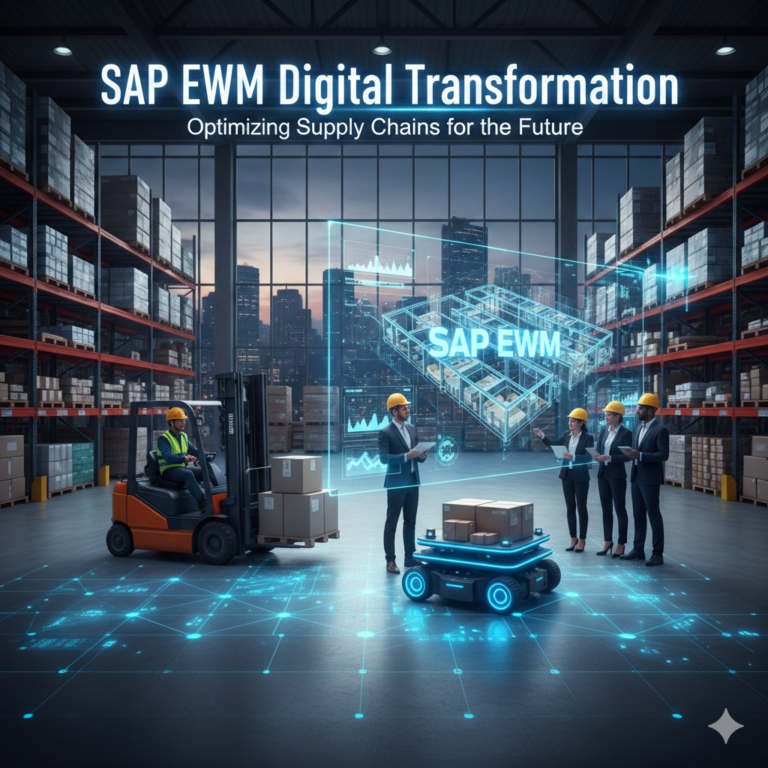
In today’s logistics landscape, mobility is becoming the backbone of warehouse operations. With supply chains shifting toward faster fulfillment, reduced human intervention, and predictive decision-making, enterprises are aggressively embracing smart logistics technologies. At the center of this digital revolution stands SAP EWM RF (Extended Warehouse Management Radio Frequency)—a system redefining warehouse mobility with intelligent scanning, real-time workflows, and AI-driven insights.
This blog explores how SAP EWM RF is shaping the next era of mobile warehousing, integrating digital-first strategies, predictive analytics, and automation to build truly “smart” logistics environments.
Understanding the Shift Toward Warehouse Mobility
Traditional warehouses depended heavily on manual labor, paper-based operations, and batch updates. But in a high-speed digital market:
- Inventory needs real-time visibility
- Customers expect faster delivery
- Businesses require zero-error picking
- Warehouses need scalable, flexible workflows
Mobile RF technology in SAP EWM addresses all these challenges by bringing operations to the workers’ fingertips through handheld scanning devices, wearables, and mobile terminals.
Warehouse mobility is no longer an operational choice—it’s a competitive necessity.
Why SAP EWM RF Is Critical for Smart Logistics
SAP EWM RF provides an intelligent, connected layer for warehouse transactions such as picking, packing, inventory counting, replenishment, putaway, and staging. But the real value lies in its integration with smart logistics principles:
✔ Real-Time Data Flow Across the Warehouse
Every scan updates the SAP system instantly, ensuring accurate inventory, stock movements, and workload visibility.
✔ Digital-First Workflows
Mobile-first design eliminates paperwork, shortens cycle times, and reduces dependency on manual processes.
✔ AI and Predictive Analytics Support
SAP EWM combined with SAP BTP and AI services enables automated decision-making such as predicting stock shortages, optimizing pick routes, and improving worker productivity.
✔ Scalable for Growing Warehouse Networks
Whether a business has one warehouse or multiple global facilities, SAP EWM RF standardizes and scales mobile execution seamlessly.
AI-Driven Mobile RF Workflows: The Next Big Leap
AI integration with SAP EWM RF is transforming the traditional model of warehouse operations. Here’s how AI enhances mobile RF workflows:
1. Predictive Replenishment
AI analyzes:
-
Demand trends
-
Picking frequency
-
Seasonal fluctuations
-
SKU movement patterns
This enables predictive replenishment, where the system alerts warehouse workers through RF devices before a stockout occurs. This ensures:
-
Zero disruption to outbound processes
-
Optimized labor scheduling
-
Reduced emergency replenishments
2. Smart Pick Path Optimization
AI algorithms determine:
-
Shortest walking distance
-
Optimal route sequence
-
Fastest batch picking strategy
RF devices then guide workers step-by-step, increasing pick efficiency by up to 40% while reducing fatigue.
3. Dynamic Task Assignment
Based on real-time analytics:
-
Worker performance
-
Workload distribution
-
Equipment availability
-
Priority orders
AI dynamically assigns RF tasks to the best-suited warehouse operators.
4. Intelligent Error Prevention
AI-powered RF workflows can detect anomalies such as:
-
Wrong item scanned
-
Out-of-sequence picking
-
Unexpected stock location
-
Quantity mismatches
The device immediately warns the user and suggests corrective actions—reducing costly errors.
Digital-First Warehouse Strategy Powered by SAP EWM RF
Modern warehouses are transitioning from manual, paper-based workflows to fully digital ecosystems. SAP EWM RF is central to this transformation due to the following capabilities:
1. Mobile Execution for Every Warehouse Process
RF devices manage:
-
Inbound receiving
-
Putaway
-
Picking (wave, batch, cluster, zone picking)
-
Quality checks
-
Packing & staging
-
Replenishment
-
Inventory counting
-
Stock transfers
With digital instructions and instant confirmations, warehouses achieve speed and consistency.
2. Zero Dependency on Paper
RF scanning reduces paperwork for:
-
Pick lists
-
Goods receipt forms
-
Cycle count sheets
-
Loading documentation
This improves operational accuracy and significantly cuts administrative time.
3. Mobility for Field and Yard Logistics
RF-enabled workflows can extend beyond the warehouse building:
-
Yard check-ins
-
Dock door validation
-
Vehicle loading confirmation
-
Supplier handovers
This ensures end-to-end process visibility.
4. Mobile-Ready Workforce
RF tools simplify onboarding by offering:
-
User-friendly screens
-
Step-by-step guidance
-
Personalized personas (roles, languages, skill levels)
-
Minimal training time
Result: Higher workforce productivity and lower training costs.
Predictive Analytics in SAP EWM: Powering Smarter Warehouses
Predictive analytics enhances decision-making beyond immediate operations:
1. Predicting Inventory Issues
Using historical data + real-time scans, analytics can detect:
-
Slow-moving stock
-
Overstock risk
-
Potential stock damage
-
Storage misplacement patterns
Warehouse managers can proactively correct issues before they escalate.
2. Forecasting Workload and Workforce Demand
Predictive models help calculate:
-
Highest picking times
-
Peak inbound days
-
Required labor per shift
-
Expected replenishment volume
This ensures better labor planning and cost control.
3. Predictive Maintenance for Equipment
RF-connected devices can track:
-
Battery health
-
Scan errors
-
Device downtime patterns
Predictive insights help schedule maintenance to ensure uninterrupted operations.
How SAP EWM RF Supports Supply Chain Automation
Smart logistics relies heavily on automation. SAP EWM RF integrates seamlessly with:
-
AGVs (Automated Guided Vehicles)
-
Autonomous mobile robots (AMRs)
-
Conveyor systems
-
Pick-to-light & put-to-light
-
Automated storage and retrieval systems (ASRS)
-
Drones for stock counting
RF devices act as the command and control layer, guiding human workers while synchronizing with automated equipment.
Building a Future-Ready Warehouse with SAP EWM RF
To create a scalable, future-proof warehouse, businesses must adopt strategies that reflect upcoming trends:
1. Embrace Hybrid Workforce Models
RF devices will coexist with robots, with tasks distributed intelligently.
2. Adopt AI-Enhanced RF Execution
AI will become standard for pick prediction, workload optimization, and anomaly detection.
3. Use Cloud-Based SAP EWM for Greater Flexibility
Cloud EWM enables:
-
Faster deployment
-
Lower infrastructure cost
-
Continuous innovation (AI, ML, mobility updates)
4. Enhance Mobility with Advanced RF Hardware
Next-gen RF devices will include:
-
Voice-enabled picking
-
AR-based pick navigation
-
Wearable smart scanners
-
Ruggedized mobile scanners with AI chips
5. Integrate End-to-End Digital Twin Technology
Digital twins will simulate the warehouse environment to:
-
Predict bottlenecks
-
Model new layouts
-
Optimize picking strategies
-
Improve throughput
RF data will fuel these simulations with real-time accuracy.
Conclusion
The future of logistics is mobile, connected, and intelligent. SAP EWM RF is more than a mobile scanning tool—it is a strategic enabler of smart logistics, driving digital-first operations, predictive analytics, and warehouse automation.