Smart Warehousing & IoT — The Next Frontier for SAP EWM

How Connected Logistics Is Redefining Warehouse Efficiency
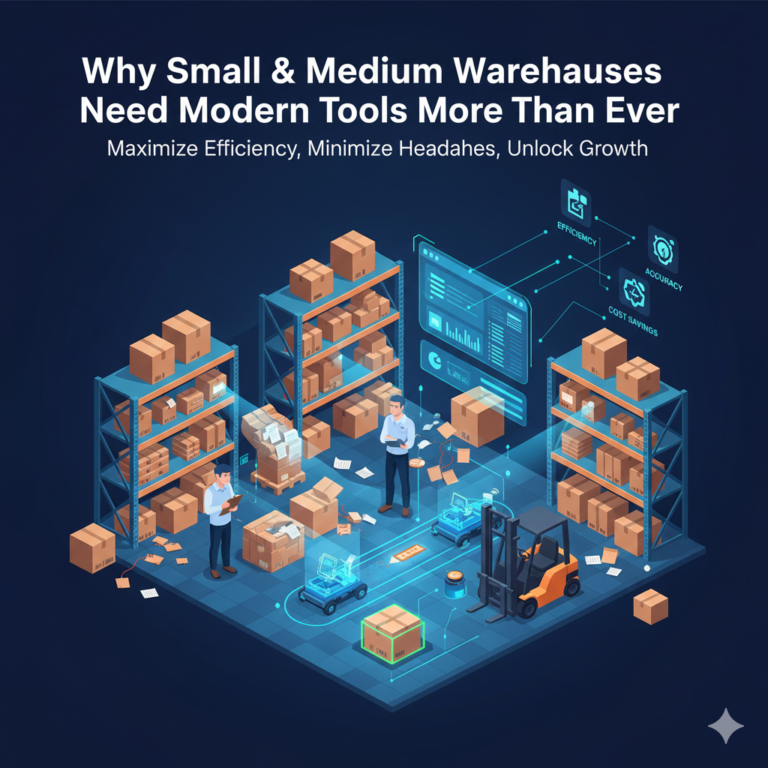
In today’s fast->aced supply-chain landscape, warehouses must evolve rapidly. The rise of e-commerce, omnichannel fulfillment, rising SKU volumes, and increasing customer expectations have pushed traditional warehouse models to their limits. Inefficiency or outdated systems can lead to stock errors, delayed deliveries, or expensive operational bottlenecks.
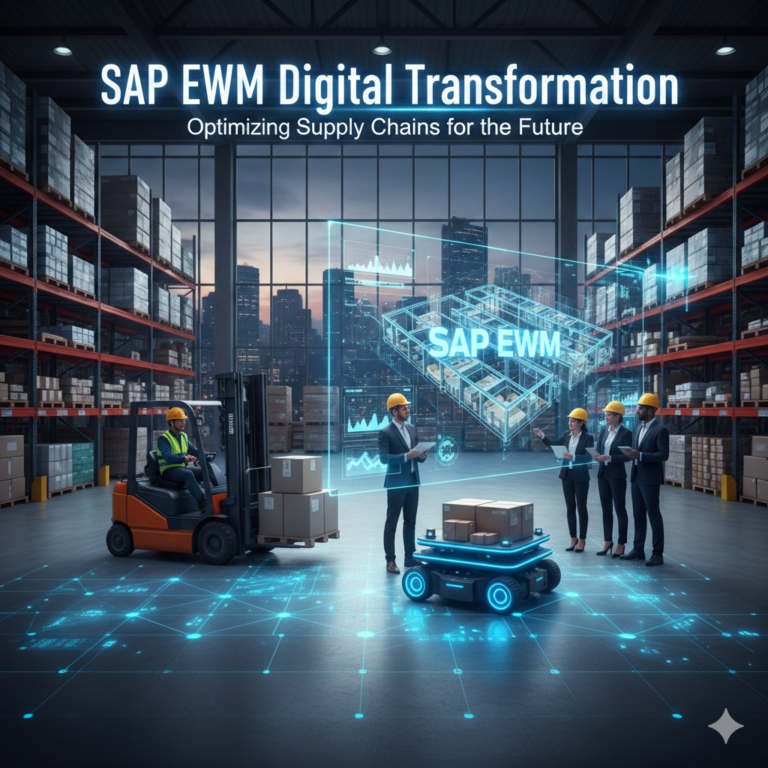
This is where Smart Warehousing, powered by IoT (Internet of Things) and SAP Extended Warehouse Management (SAP EWM), becomes the next major shift for modern logistics. Smart warehouses do not rely on manual entries or isolated systems—they operate on live data, automated workflows, and intelligent insights.
In this blog, we explore how IoT transforms warehouse operations, how SAP EWM serves as the central brain of this connected environment, and why adopting Smart Warehouse technology is now essential for future growth.
1. What Is Smart Warehousing?
A smart warehouse uses technology such as:
- IoT sensors
- RFID tags
- Smart shelves
- Automated material-handling systems
- AI & analytics
- Robotics & AGVs
- Wearable devices (smart gloves, smart glasses)
to automate operations and provide real-time insights.
Unlike traditional warehouses, which rely heavily on manual labor and delayed data updates, smart warehouses enable:
- Real-time inventory tracking
- Predictive maintenance
- Automated picking & routing
- Environmental monitoring
- Seamless order fulfillment
- Faster decision-making
The outcome is a warehouse that is faster, more accurate, safer, and cost-efficient.
2. How IoT Fits Into Warehouse Operations
IoT devices collect and transmit live data. In a warehouse, this includes:
- Temperature & humidity sensors
- RFID-tagged pallets and cartons
- Smart forklifts and AGVs
- Vibration sensors on machinery
- Smart cameras and scanners
- Bin sensors to detect stock levels
- Wearable tech for operator safety
Every device acts as a node contributing to a digital ecosystem. This creates complete visibility across the warehouse—something impossible with manual systems.
3. The Role of SAP EWM in Smart Warehousing
While IoT provides the data, SAP EWM acts as the control center. It collects, analyzes, and uses IoT data to make intelligent decisions, such as:
- Where to store incoming goods
- How to optimize picking routes
- Which bins need replenishment
- When equipment requires maintenance
- How to assign labor efficiently
- How to balance workload across zones
By integrating IoT with SAP EWM, warehouses achieve true automation. SAP EWM becomes the “brain”, and IoT devices act as the “nervous system”.
4. Real-Time Inventory Visibility with IoT + EWM
Inventory accuracy is a major challenge in traditional warehouses. Manual stock entry, paperwork, and delayed updates lead to mismatches.
With IoT-integrated EWM:
- RFID tags automatically update stock movement
- Smart bins detect low inventory
- Sensors track item location at all times
- Real-time dashboards show exact stock levels
This eliminates ghost inventory, overstocking, and sudden stockouts. Supervisors always know the exact quantity, location, and status of every item.
5. IoT for Inbound and Outbound Optimization
Inbound (Goods Receipt)
IoT helps by:
- Scanning RFID items instantly
- Detecting damaged goods
- Tracking pallet movement
- Suggesting automated putaway locations
SAP EWM uses this data to assign optimal bins and generate inbound tasks without delay.
Outbound (Picking & Shipping)
IoT-driven picking enhances:
- Speed (automated routing)
- Accuracy (smart scanning)
- Efficiency (wearable picking solutions)
Smart carts, AGVs, and picking robots receive instructions from SAP EWM to complete tasks faster and with fewer errors.
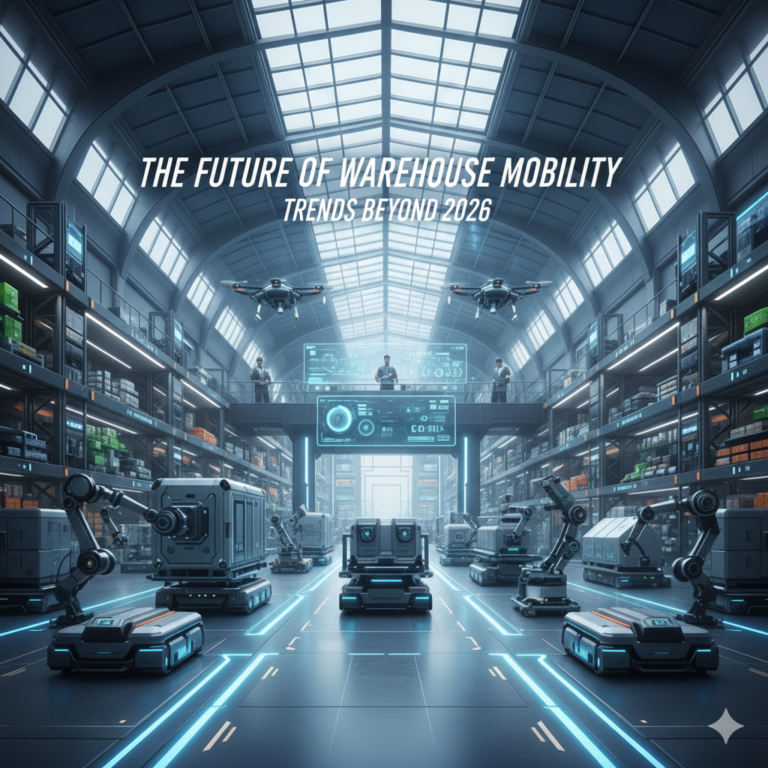
6. Warehouse Automation with AGVs & Robotics
Automated Guided Vehicles (AGVs) and robots are becoming a core part of smart warehouses. They handle:
- Material movement
- Picking
- Sorting
- Pallet transport
- Zone-to-zone transfers
These devices communicate with SAP EWM using IoT protocols. Warehouse tasks are assigned automatically and completed with high precision.
For example:
- An AGV receives a task when a pallet arrives at inbound.
- It moves the pallet to the correct zone.
- A robot picks the items for outbound.
- Sensors confirm every step to SAP EWM in real time.
The result is a high-speed, touchless workflow.
7. IoT for Safety, Compliance & Worker Protection
Smart warehouses use IoT to ensure a safe working environment:
- Wearables alert workers about forklift movements.
- Sensors detect spills, fire risks, or hazardous conditions.
- Smart forklifts stop automatically when obstacles are detected.
- Environmental sensors track temperature, humidity, and air quality—especially important for pharma, food, or chemical industries.
SAP EWM stores and analyzes this data to maintain compliance and support audits.
8. Predictive Maintenance
One of the biggest cost-saving advantages of IoT is predictive maintenance.
Machines such as conveyors, forklifts, sorters, and robots often break down without warning, causing operational downtime.
IoT-enabled predictive maintenance allows:
- Early detection of issues
- Scheduling repairs at ideal times
- Prolonged equipment lifespan
- Reduced repair costs
SAP EWM can integrate with SAP PM (Plant Maintenance) to trigger automated maintenance tasks based on sensor feedback.
9. Better Resource Allocation
With IoT inputs such as zone traffic, heat maps, picking frequency, and forklift movement, SAP EWM gets the data it needs to allocate manpower efficiently.
It automatically determines:
- How many workers are needed per zone
- Which tasks need priority
- When to schedule staff breaks
- How to balance workload
This leads to higher productivity without hiring additional staff.
10. Environmental Monitoring (Especially for Sensitive Goods)
For industries dealing with:
- Medicines
- Food items
- Frozen goods
- Hazardous materials
Even slight changes in temperature or humidity can damage products.
IoT sensors continuously track:
- Temperature
- Humidity
- Air quality
- Light exposure
If conditions cross the safe threshold, SAP EWM receives alerts and triggers corrective actions—such as adjusting cooling systems or moving stock.
11. Benefits of IoT + SAP EWM Integration
1. Higher Accuracy
Automated scanning and RFID eliminate human errors.
2. Faster Operations
Robotics, wearables, and smart devices speed up picking, putaway, and dispatch.
3. Better Visibility
Decision-makers get real-time dashboards with accurate insights.
4. Lower Operational Costs
Less manual labor and fewer errors lead to significant savings.
5. Improved Safety
Sensors reduce accidents and maintain compliance.
6. Higher Customer Satisfaction
Faster and accurate deliveries improve customer trust.
7. Scalability
IoT systems are modular — you can expand anytime.
12. Challenges to Consider Before Implementing IoT in Warehousing
Even though IoT brings massive benefits, businesses must consider:
1. Infrastructure readiness
Warehouses must have strong Wi-Fi or 5G networks.
2. Device management
Hundreds of IoT devices need proper monitoring.
3. Data security
Sensitive inventory and operational data must be protected.
4. Initial investment
Though long-term ROI is high, initial setup requires planning.
5. Skilled workforce
Teams must be trained to use smart devices efficiently.
13. The Future of SAP EWM with IoT
The combination of IoT, SAP EWM, and automation is leading the warehouse industry into a new era. The next evolution will include:
- AI-powered forecasting
- Machine learning for routing optimization
- Fully autonomous warehouses
- Drone-based inventory cycle counting
- Zero-touch inbound and outbound workflows
Companies that adopt this technology today will gain a serious competitive advantage tomorrow.
Conclusion
Smart Warehousing powered by IoT is no longer an optional upgrade—it’s the future of modern logistics. When combined with SAP EWM, IoT transforms warehouses into connected, automated, and highly efficient operations.
Businesses gain:
- Real-time visibility
- Predictive analytics
- Faster order fulfillment
- Higher accuracy
- Lower operational costs
- Enhanced safety
As more companies move toward digital transformation, those who delay will face operational inefficiencies and rising costs. The right time to adopt Smart Warehouse technology is now.