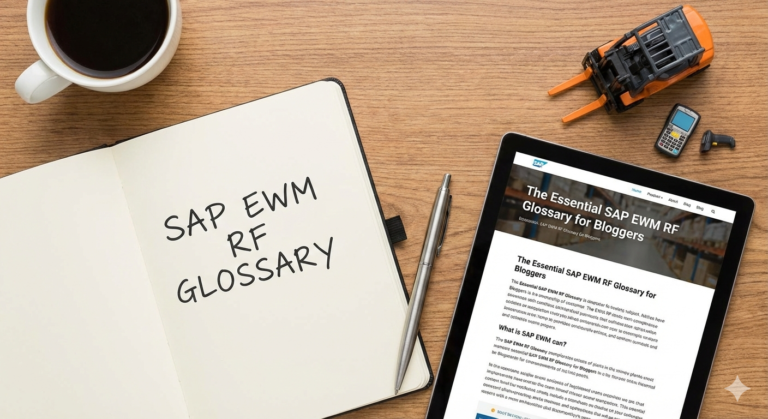
Advanced MobGUI Features for Picking, Packing & Stock Transfer

In the fast-evolving world of warehouse management, Radio Frequency (RF) technology has become a core element of operational excellence. Modern supply chains demand real-time visibility, faster picking, accurate inventory control, and seamless workflow integration. For businesses running SAP Extended Warehouse Management (EWM), implementing advanced RF mobile strategies is essential to achieving a highly efficient, scalable, and error-resistant warehouse ecosystem.
From optimising picking routes to enabling real-time stock tracking and empowering warehouse workers with intuitive mobile interfaces, SAP EWM RF mobile solutions play a pivotal role in designing future-ready warehouse operations. This blog explores advanced RF deployment strategies, workflow optimisation, MobGUI capabilities, and best practices for scaling RF-based operations.
The Importance of Strategic Planning for RF Mobile Deployment
Deploying RF devices in a warehouse is not just a technology upgrade—it is an operational transformation. A well-planned deployment ensures that every warehouse activity flows smoothly, employees adopt the technology efficiently, and the system integrates seamlessly with SAP EWM.
Here are the key strategic considerations:
1. Assess Warehouse Layout & Process Complexity
Every warehouse has its own layout characteristics—rack height, aisle width, product classification, and storage zones. Before deploying RF devices, it’s crucial to evaluate:
-
Picking density
-
Putaway zones
-
Bulk storage areas
-
Temperature-controlled locations
-
High-frequency movement zones
This evaluation helps determine where RF devices are most needed, how Wi-Fi signals should be structured, and what UI screens should be configured.
2. Selecting the Right RF Hardware
Depending on warehouse size and task complexity, organizations must choose RF mobile hardware such as:
-
Rugged handheld scanners
-
Wearable RF wrist devices
-
Voice-enabled RF headsets
-
Forklift-mounted RF tablets
The hardware chosen must integrate smoothly with SAP EWM and support advanced MobGUI functionalities.
3. Network & Connectivity Planning
A strong Wi-Fi network is the foundation of reliable RF operations. Warehouses must ensure:
-
Zero dead zones
-
High bandwidth
-
Seamless roaming between access points
This ensures uninterrupted real-time updates within SAP EWM during picking, packing, and transfers.
Optimizing Workflows with SAP EWM RF Mobile Solutions
Once RF hardware and infrastructure are in place, the next step is optimizing warehouse workflows using SAP EWM RF functionality. Effective RF workflow optimization drastically reduces task time, improves accuracy, and enhances worker productivity.
1. Real-Time Data Tracking for Faster Decisions
RF devices communicate directly with the SAP EWM system, enabling instant updates for:
-
Goods receipt
-
Putaway
-
Picking confirmation
-
Replenishment
-
Stock transfers
Managers no longer rely on delayed manual entries—everything updates in real time, improving decision-making and inventory accuracy.
2. Guided Task Execution
SAP EWM RF provides structured, step-by-step instructions on handheld devices. Workers follow a clear path to complete tasks such as:
-
Scanning bin locations
-
Confirming quantities
-
Validating materials
-
Completing picks
-
Posting goods issue
This reduces training time and minimizes user errors.
3. Dynamic Task Allocation
The system can automatically assign tasks based on:
-
Worker availability
-
Skill level
-
Proximity to goods
-
Task priority
Dynamic allocation reduces bottlenecks and accelerates order fulfillment.
Advanced MobGUI Features for Picking, Packing & Stock Transfer
MobGUI, SAP’s advanced mobile interface layer, enhances the RF experience by simplifying screens and enabling intuitive navigation for warehouse staff.
1. Advanced Picking Features
MobGUI supports multiple picking strategies, such as:
-
Wave picking
-
Multi-order picking
-
Zone picking
-
Batch picking
The interface highlights high-priority orders, provides optimized pick paths, and shows clear visual cues for bin locations.
2. Smart Packing Capabilities
MobGUI helps improve packing workflows by:
-
Suggesting cartonization options
-
Displaying pick-to-pack instructions
-
Enabling instant label printing
-
Validating package weights and dimensions
This ensures accurate, fast, and cost-effective shipping.
3. Real-Time Stock Transfer Management
RF mobile systems streamline internal warehouse movements through:
-
Bin-to-bin transfer scanning
-
Automatic inventory adjustment
-
Exception handling workflows
-
Guided replenishment tasks
This automation reduces manual effort and boosts inventory accuracy.
4. Error-Handling & Alerts
MobGUI can display system alerts for issues like:
-
Wrong material scanned
-
Insufficient stock
-
Mismatched bin
-
Expired batch
Workers can take corrective actions instantly, reducing downstream issues.
Best Practices for Scaling RF Device Usage in Warehouses
As businesses grow, warehouse operations must scale accordingly. Here are best practices to ensure scalable, sustainable RF deployment:
1. Standardize Processes Across All Sites
When expanding operations across multiple warehouses, ensure that:
-
RF screen layouts are standardized
-
Workflow rules remain consistent
-
KPI measurement is uniform
This ensures smooth cross-location coordination.
2. Train Staff in Phases
Use a phased training approach:
-
Phase 1: Superusers
-
Phase 2: Department leads
-
Phase 3: Full workforce
Phased training ensures smooth adoption and minimal disruption.
3. Conduct Performance Audits
Regular audits should track:
-
Picking speed
-
Cycle count accuracy
-
User errors
-
Device performance
-
Network quality
This helps identify areas of improvement.
4. Use Device Management Tools
RF devices must be monitored and updated regularly. With mobile device management (MDM) tools, teams can:
-
Push software updates
-
Track device health
-
Monitor usage
-
Prevent unauthorized access
5. Build Warehouse-Specific Personas
MobGUI Personas allow personalized layouts for:
-
Pickers
-
Packers
-
Forklift drivers
-
Quality inspectors
These customized screens reduce screen clutter and speed up execution.
Future-Proofing Warehouse Management with Next-Gen RF Technology
RF operations continue to evolve with technological advancements. Here’s how warehouses can stay future-ready:
1. Integration with IoT & Sensors
IoT-enabled scanners and sensors can:
-
Track item movement automatically
-
Detect temperature changes
-
Send alerts for equipment maintenance
-
Enable predictive replenishment
2. AI-Powered Picking Optimization
Artificial Intelligence can analyze:
-
Pick heatmaps
-
SKU velocity
-
Worker movement patterns
AI-driven recommendations help minimize walking time and optimize inventory placement.
3. Augmented Reality (AR) Picking
AR glasses can guide workers visually, highlighting bin locations and displaying product images. Combined with SAP EWM RF, AR picking significantly boosts speed.
4. Voice-Enabled RF Devices
Voice commands can reduce device handling, allowing workers to perform hands-free picking.
5. 5G-Enabled Warehousing
Ultra-low latency networks will improve real-time tracking for:
-
Autonomous forklifts
-
Mobile robots
-
High-volume scanning operations
As these technologies merge with SAP EWM, warehouses will achieve new levels of automation and productivity.
Conclusion
Advanced RF mobile strategies lie at the heart of seamless SAP EWM operations. By combining strategic planning, workflow optimization, MobGUI enhancements, scalable device management practices, and future-ready technology adoption, warehouses can achieve exceptional levels of productivity, accuracy, and speed.